 English

 English
The installation and commissioning of industrial fans is a crucial step in ensuring their performance, safety, and service life, and must be strictly operated in accordance with regulations. The following is the professional level installation and debugging process and precautions:
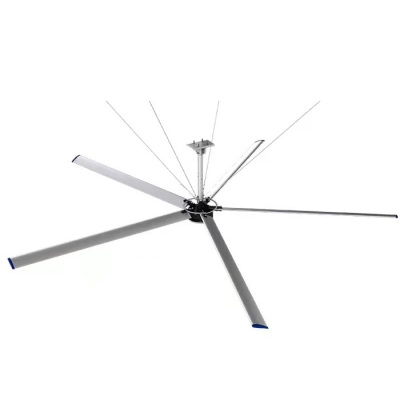
1、 Preparation before installation
1. On site survey
Structural verification:
Measure the net height of the factory building (requirement ≥ 3.5 meters, ideal 4-15 meters)
Confirm roof load-bearing capacity (single point suspension must be ≥ 150kg, steel structure must provide load proof)
Check for obstacles (reserve 1.2 times the diameter space within the fan rotation range)
Electrical inspection:
Voltage matching (380V/220V ± 10%)
Cable specifications (≥ 3 × 2.5mm ² copper core wire with grounding protection)
2. Tool List
Tool type and purpose
Laser level calibration fan levelness (error ≤ 0.5 °)
Tighten bolts with torque wrench (M12 bolts require 50-60N · m)
Vibration tester acceptance operation vibration value (≤ 2.8mm/s)
2、 Installation steps
1. Installation of lifting system
Steps:
Positioning lifting point (avoiding the main beam weld seam, with a spacing of ≥ 1.5 times the fan diameter)
Install shock absorber suspension rod (recommended rubber shock absorber, compression amount ≤ 10%)
Hanging main frame (using G80 level lifting chain, safety factor ≥ 5 times)
2. Fan blade assembly
Key control points:
Fan blade pairing installation (blade weight difference of the same fan ≤ 5g)
Anti loosening treatment of bolts (application of thread glue+installation of spring washers)
3. Electrical wiring
Standard requirements:
Cable protection through metal hose (preventing rodent bites/mechanical damage)
Grounding resistance<4 Ω (verified with a grounding resistance tester)
3、 Debugging process
1. Mechanical debugging
Project standard testing method
Fan blade static balance deviation ≤ 3g detected by balance meter
Rotation concentricity, radial runout<2mm, measured with a dial gauge
The gap between the protective net is ≥ 15cm. Measure the low point with a tape measure
2. Electrical debugging
Steps:
No load test run (30 minutes, observe current fluctuation<5%)
Speed regulation test (3-speed wind speed switching without lag)
Protection function test (simulate power outage/overload, verify emergency stop response)
3. Airflow organization verification
Wind speed mapping:
Measurement point layout: The ground is arranged in a 5m × 5m grid
Qualification criteria: Wind speed of 1.5-3m/s at a height of 1.5m from the ground, with uniformity greater than 85%
4、 Acceptance criteria
Safety indicators
Vibration acceleration < 0.5g (detected by vibration analyzer)
Noise ≤ 55dB (A) (measured at a distance of 5 meters from the fan)
Performance indicators
Coverage area meets the standard (7.3-meter fan ≥ 1200 ㎡)
Temperature gradient improvement (temperature difference between roof and ground ≤ 3 ℃)
5、 Common problem handling
1. Installation phase issues
Problem: Fan blade rotation scraping protective net
Reason: The levelness is not calibrated or the frame is deformed
Solution: Re level and calibrate the roundness of the protective net
2. Debugging phase issues
Problem: Motor overheating (>80 ℃)
Reason: Low voltage or lack of oil in bearings
Solution: Adjust the power supply voltage to ± 5% and replenish lubricating grease
6、 Professional advice
Installation team requirements:
Must hold a high-altitude operation certificate and an electrician certificate
On site guidance from manufacturer certified engineers (it is recommended to require a team of at least 2 people)
Document retention:
Save installation video (key process records)
Sign the debugging report (including measured data such as vibration and wind speed)
Intelligent upgrade:
Install IoT module (real-time monitoring of operational data)
Suggested brands: Big Shepherd iFan System, Hunter Connect
By strictly following the above process, it can be ensured that industrial fans achieve:
Safe operation (0 risk of falling)
Effective cooling (coverage area compliance rate of 100%)
Long lifespan (bearing lifespan>50000 hours)
It is recommended to choose a manufacturer that provides installation engineering insurance to avoid accidental risks.


