Industrial mobile fans, with their flexible displacement, high air volume, strong ventilation, fast cooling, installation without fixation, and high cost-effectiveness, are suitable for various scenarios such as factories, construction sites, warehouses, outdoor operations, etc. They are universal equipment for workshop ventilation and cooling, dust removal and ventilation, drying and dehumidification.
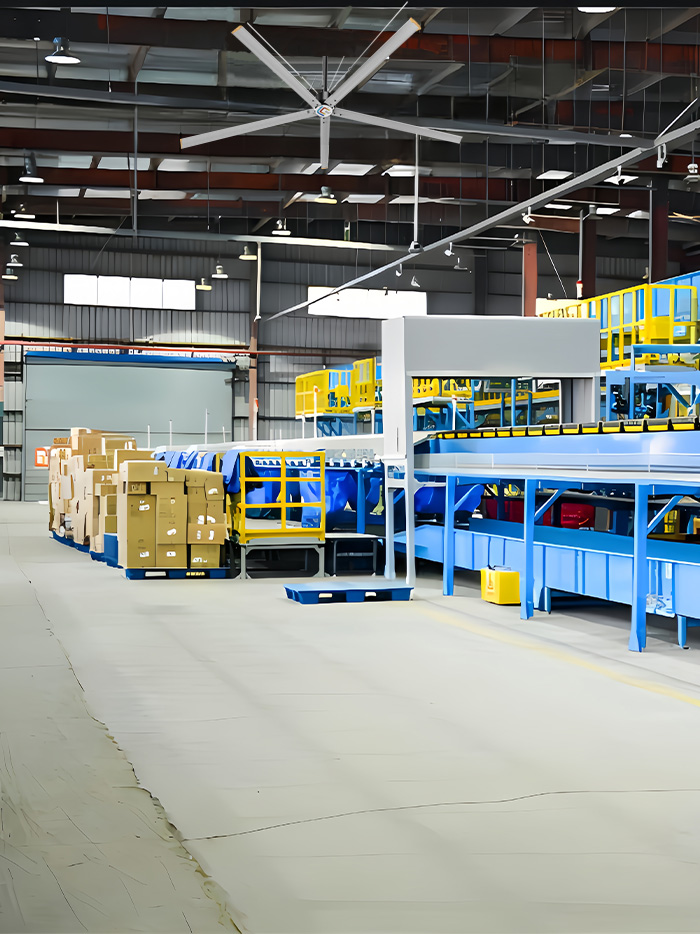
1. Production and processing workshop (core mainstream scene)
High temperature workstations for mechanical processing, hardware forging, welding and polishing, injection molding, printing and dyeing, heat treatment, etc
Designated positions for cooling, dispersing equipment heat dissipation, welding heat waves, and oil fume heat
Accelerate air circulation, alleviate stuffiness and odor accumulation in the workshop, and improve the working environment for employees
Locally blow away dust and light mist, assist in simple dust removal, and improve workshop air quality
2. Large scale warehousing and logistics warehouses
Raw material warehouse, finished product warehouse, express sorting center, large material yard
Large scale air circulation to prevent goods from getting damp, moldy, and accumulating odors
Designated air supply for sorting, packaging, and loading/unloading stations to alleviate the stuffiness of enclosed warehouses
Low cost ventilation in spacious areas to compensate for insufficient coverage of fixed ventilation equipment
3. Construction sites&renovation sites
Civil construction, interior decoration, tunnel basement, enclosed construction area
Disperse formaldehyde, paint odor, cement dust, and construction fumes
Cooling of temporary work surface and improvement of ventilation conditions in narrow and enclosed spaces
Temporary emergency ventilation for construction, no installation restrictions, can be used and moved as needed
4. Steel structure factory/temporary greenhouse/simple shed area
Steel structure high span factory building, temporary material shed, breeding shed, processing temporary shed
These types of buildings have high ceilings, poor insulation, and rapid heating due to exposure to sunlight in summer
Large scale circulation air supply reduces overall environmental temperature and solves the problem of high temperature and stuffiness
5. Outdoor homework&outdoor areas
Outdoor operation platform, material storage area, parking lot, outdoor maintenance workstation in the factory area
Outdoor work in summer to prevent heatstroke and cool down, resistant to dust and sun exposure, with strong outdoor durability
Temporary event sites, temporary gatherings in the factory area, ventilation and cooling for outdoor debugging operations
6. Dehumidification and drying scenarios in humid environments
Underground garage, basement, semi-finished product drying area, wet processing workshop
Strong air convection accelerates the evaporation of moisture from the ground, workpieces, and walls
Reduce environmental humidity to prevent equipment rusting, workpiece moisture regain, and slippery floors
7. Auxiliary use for special processes
Workpiece cooling: forging, injection molding, and die-casting workpieces are cooled by rapid air cooling
Material drying: packaging sealing, surface drying after spraying, drying of small products
Odor dispersion: Ventilation and odor dispersion in chemical auxiliary material workshops, cleaning stations, and oil contaminated work areas
8. Personnel intensive temporary industrial areas
Temporary assembly line, outsourced processing area, temporary work shed, logistics support area
Flexible allocation of machine positions, suitable for temporary labor and production lines where it is hot and humid
Supplement core advantages (adapt to scene logic)
No need for fixed installation, universal wheel design, free displacement, and on-demand point placement;
Large air volume, long air supply distance, suitable for industrial spaces with high floors and large spans;
High protection level, resistant to manufacturing and dust, suitable for harsh working conditions such as oil stains, dust, and high temperatures;
Low investment cost and low power consumption, replacing central air conditioning and large negative pressure fans for local efficiency improvement.


